The Humanist
She trained in cultural heritage and journalism, dropped science at fifteen, and very nearly talked herself out of the job that would make her career. Twenty-five years on, Jess Huf has helped bring some of Australia’s first breakthrough cancer therapies to patients, and built a reputation as one of the industry’s most candid and humane leaders. A conversation about courage, listening, and the quiet art of bringing people along.
Jess Huf will tell you, without much prompting, that she was a clueless young woman when she took her first job in this industry. She means it almost fondly. She had just finished a Bachelor of Applied Science in cultural heritage management and journalism at the University of Canberra (part learning how a society decides which old and beautiful things are worth keeping, part learning how to tell their stories), and she had dropped school science at fifteen, in favour of history, English, languages and the arts. She had, by her own admission, no real idea what a pharmaceutical sales territory even was. So when the hiring manager kept stressing how large hers would be (“no less than half a dozen times,” she remembers, across three interviews), she simply nodded along each time, none the wiser as to whether a big territory was a good thing, a bad thing, or simply a thing.
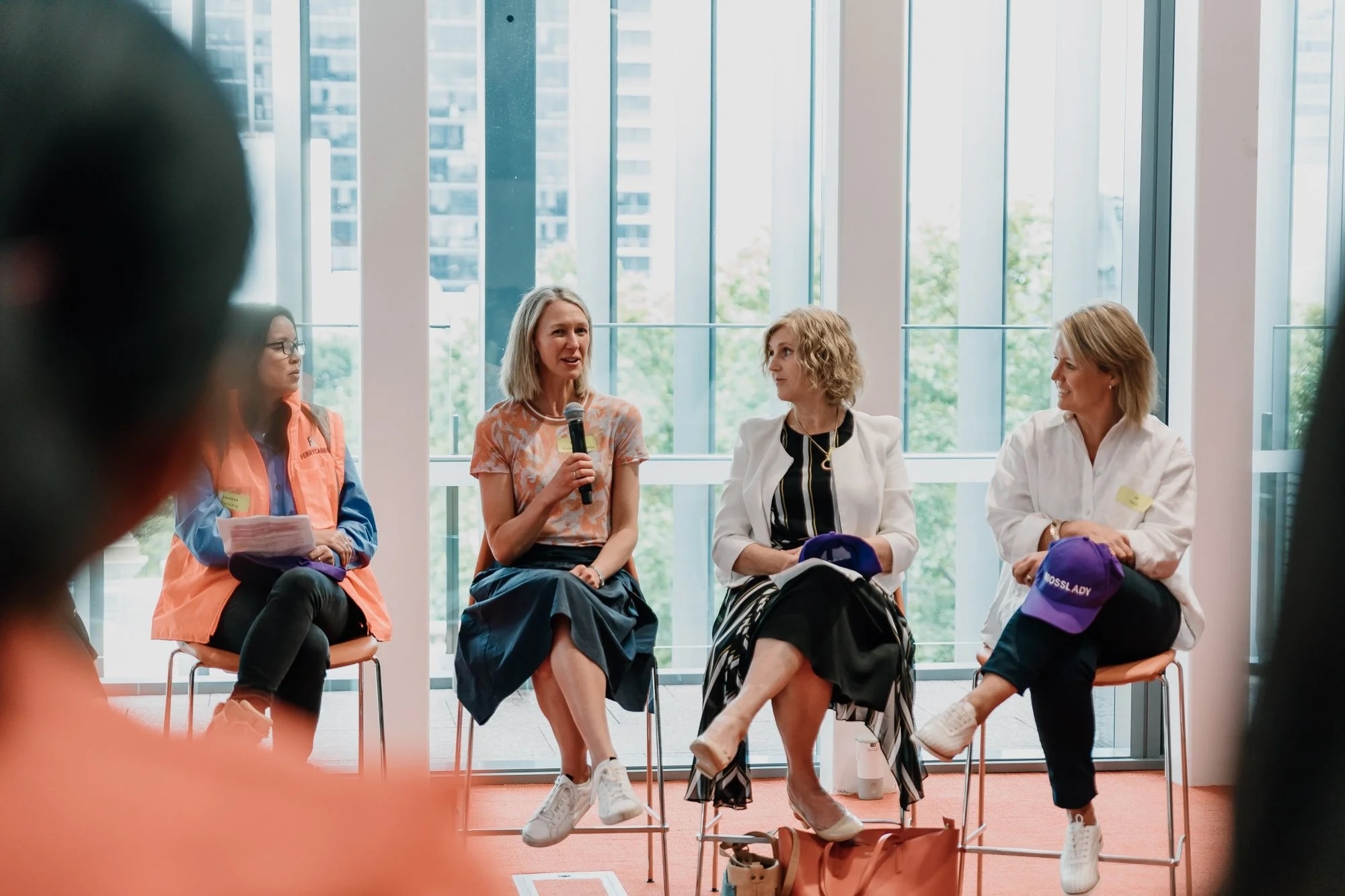
The territory turned out to run from Eden, on the far south coast of New South Wales, across to Finley, up to Griffith, over to Goulburn, around through Canberra and back down to Batemans Bay. “For our friends in the northern hemisphere,” as I put it to her, that is roughly the footprint of a small European country. Jess laughs about it now. “I was clueless,” she says. But she also discovered something on those long drives that has quietly organised the rest of her working life. “As much as I’m a chatterbox, and I get a lot of energy from being around people,” she says, “I actually love my own company. I enjoyed the time on the road, getting out to all those little nooks and crannies of the country.”
It is a small detail, but a telling one. The woman who would go on to lead global launch teams out of Shanghai and London, to run a national sales force across the Tasman, and now to head up the oncology business for Novartis in Australia, began by finding joy in the parts of the job that other people quietly endure. She is, in conversation, exactly the person her colleagues describe: warm, funny, disarmingly direct, generous with credit and quick to turn the spotlight back onto the people around her. She is also, and this is the part most people don’t know, someone who still wrestles with significant anxiety, who was so shy as a child that she took drama at school to force herself out of her shell. How those two things live inside the same person is, in a sense, the whole story.
The accidental rep
Jess did not set out to work in medicines. She set out to work in heritage. But by the time she reached the end of her degree in Canberra, she had done the arithmetic. “There were, like, ninety graduates across ANU and UC all vying for about three jobs,” she says. The career runway in heritage and preservation was, to put it gently, short. What she did have was a stepfather who was a pharmacist, and a string of weekend and university jobs behind a pharmacy counter to “augment my funding mechanisms,” as she puts it, with the faint irony of someone who has spent a long time around corporate language.
The nudge came from a friend, someone she had gone to university with and worked alongside in a pharmacy, who landed a role as a representative with a pharma company. “Really, it was her journey that got me looking and going, I think I’d quite enjoy that. Don’t know whether I’d be any good, but give it a crack.” That phrase, give it a crack, recurs throughout Jess’s account of her own life, and it is worth holding onto, because it is the through-line of almost every good decision she says she ever made.
What did she think the industry was, before she got inside it? Not much, honestly. But she had noticed two things about her friend’s new life. The first was flexibility: the autonomy of being out in the field, in charge of your own week. The second was the investment. “This was back in the days when they’d bring you in for three or four weeks of face-to-face training before they’d even set you loose out into the ether with customers,” she says. “They seemed to invest a lot in the people.” She applied, she got the job, and she started, nervous and curious in equal measure, as a sales rep in Canberra.
The science she’d left behind
There was, of course, the not-small matter of the science. Jess had walked away from it as a teenager. Now her entire job was to sit across the desk from highly trained doctors, people who had studied medicine for years, and earn their respect. “That felt pretty scary at the time,” she admits. What rescued her was not a sudden aptitude for biochemistry. It was meaning. Her first role was in women’s health: HRT, fertility, the things that touched her own life and the lives of the women around her. “Science finally became exciting and energising and interesting to me,” she says, “because it was connected to something I cared about.” The interest in the science came second. The interest in the people came first, and pulled the science along behind it.
The industry’s other great surprise, for many newcomers, is how regulated it is, even where that regulation is self-imposed. Jess, almost uniquely, found this part comforting rather than constraining. “My partner jokes about me being very rules is rules,” she says. “I’ve got a pretty strong moral compass. I like structure. I like some rules and guardrails to show me where to go.” Where colleagues chafed against the codes of conduct and the compliance frameworks, she relaxed into them. And because the guardrails were fixed, the creativity had somewhere to go. “There’s definitely a huge creative side to me,” she says. “The creativity manifests through problem-solving.” It is a neat description of the job she has done ever since: imaginative work, performed inside firm lines.
Courage on her behalf
Ask Jess about mentors and she resists the tidy version: the single wise figure who shaped everything. “It’s been different people at different times,” she says. But press her and a pattern emerges, and it is not really about advice at all. It is about courage.
The first of them was a brand manager who came out into the field with Jess early in her sales career. There was a junior marketing role open in the organisation, and it had not occurred to Jess to apply. “I didn’t even think to put my hat in the ring,” she says. “You need a marketing degree, I don’t have that. And that’s typical, right? I focused on all the things I didn’t have that made me think I wouldn’t even be a consideration.” The brand manager simply said: Why haven’t you applied? I think you’d be great. You should apply. Jess got the role. It was the beginning of the move from sales into marketing, and the start of a career that would eventually circle the globe.
What that brand manager gave her was not a marketing degree. It was, in Jess’s words, “courage on my behalf.” The technical term, she notes drily, is imposter syndrome, though she’s not sure she ever knew its name at the time. “All the people I’ve gravitated towards have been the kind who encouraged me to just have a go at something, and then decide if there’s a decision to be made once there’s an offer on the table.” Borrow someone else’s nerve, in other words, until you’ve grown your own.
It is here that Jess says her first genuinely controversial thing of the day, and then says it anyway, which is characteristic. Early in her career, she observes, it was almost always women who championed her. In the last decade or so, it has more often been men. She is uneasy even acknowledging it. “It irks me to admit,” she says, before circling the harder question underneath: “I still grapple with how many women are really prepared to support and help other women.” She has had the opposite experience too, being blocked rather than backed, and she has watched that pattern fall along gender lines across her career. She offers a theory rather than a verdict. “When you’re junior and you don’t really know what you’re doing, you’re not a threat to anyone. People are excited to help you; it’s exciting to watch. But as you become more competent and more capable, that can be challenging for people.” When seats at the top were scarce, she suggests, the competition among the few women who reached them could be fiercer than the competition across genders.
She is careful to say that this has shifted, and dramatically. The single biggest change she has seen across twenty-five years is the number of women at the leadership table. “It sounds like a cliché even to talk about it,” she says, “but it has been a revolution.” When her current company went through a major restructure a few years ago, she found herself on a local senior leadership team that was around 60 per cent women, the result, she stresses, not of tokenism but of “a really deliberate, intentional action to course-correct for historical imbalance in the other direction.” What strikes her most is that people barely remark on it now. Equal representation, or something close to it, has quietly become the expectation rather than the headline.
The map
If you ask Jess to trace her career, she does it at speed and with a comedian’s timing. Her first company was Organon: “a little company that got bought by Schering-Plough, who got bought by MSD, who then spat them back out as an offshoot, who’ve now been bought by Sun Pharma, I believe.” A brief stint at Merck Sharp & Dohme in cardiovascular followed (a job she enjoyed but left for geographic reasons), and then a first run at Novartis. Then came roughly twelve years at AstraZeneca, where her career went global: a marketing director role based in Shanghai (“not somewhere I had on my bingo card, but it ended up being one of the most incredible experiences of my life”), then London, and then a line she delivers with obvious relish: “I might be the first Australian to leave London for Auckland for a job.” She did exactly that, stepping into a national sales management role in New Zealand before personal reasons brought her home.
Back in Australia, she felt she was “becoming a little bit too familiar with all things AstraZeneca.” A move to a smaller company didn’t fit culturally, and so she returned to Novartis, “a repeat offender, as I like to say,” to build its new-product and launch-marketing capability from scratch. Seven years on, she leads its oncology business in this country.
It is the work itself, not the org charts, that animates her. Along the way she has worked on a remarkable run of firsts: one of the first targeted therapies made available in Australia in lung cancer; the first gene therapy ever brought to market in this country; the first CAR-T cell therapy ever brought to Australia. She declines to call it luck. “Well, maybe not just fortunate,” she says. “You plan that. You look at the companies, you look at their pipelines, you look at what’s in their portfolios, and if you’re smart about it, you put your energy into landing roles in organisations that are really changing the landscape.”
It is, I suggested to her, a little like climbing the tower with the lightning rod: you dramatically increase your chances of being struck. Jess liked that. She admits she’s “not sporting at all” and mangles every metaphor she reaches for, but she knows precisely where she wanted to be standing.
There is one lesson she wishes someone had handed her two decades earlier, and she offers it now to anyone hungry and impatient enough to need it. “When I was younger I was so hungry for the next promotion,” she says. “When you’re an ABM you want to be a BM; when you’re a BM you want to be an SBM; when you’re an SBM you want to be head of marketing.” What she has since learned is the value of staying put long enough to get good. “You need to spend some time in a role, repeating the delivery, to truly become, maybe not a master, but really, truly competent. There’s a piece around completion. If you move too fast, you run the risk of never being able to show what you actually did to impact the business.” Carrying something from idea all the way through to execution, and then being able to measure what it achieved, matters, for the career conversations of the future, yes, but also, she says, “so that you actually feel a sense of achievement and completion in the stuff that you do.”
Not about the product
Pressed for the piece of work she is proudest of, Jess does not reach for a launch or a sales figure. She reaches for a campaign that was not about a product at all.
At a previous company, she worked on an initiative in lung cancer, not disease awareness, exactly, but something closer to the bone. Community research had laid bare an ugly truth: when people heard that someone had lung cancer, a depressingly common reaction was, in effect, well, they must have been a smoker. As if the diagnosis were deserved. Jess’s response to that is immediate and unguarded. “I don’t care whether people were a smoker,” she says. “No one deserves that diagnosis. And as a matter of fact, a lot of people who get diagnosed with lung cancer have never smoked a cigarette in their lives. But regardless, your life is still valuable. You’re still a valuable contributor to society. You still matter. And you should still have access to the same healthcare pathways as anybody with any other cancer.”
The campaign that grew out of that research was deliberately provocative, built not with an advertising agency but a communications one, in collaboration with a patient organisation and a group of clinicians. Jess is scrupulous about not claiming it as hers; it was a team’s work, and it was finalised and launched after she had moved on. She won’t even name it, out of a sense that it isn’t her place to. What she will own is the part she is genuinely proud of: bringing a cautious, values-driven, compliance-bound organisation along on the journey, persuading it to commit, to invest, to sponsor something that did nothing directly for its own products. “It wouldn’t have happened without us as a company at the time,” she says. The achievement, in other words, was internal as much as external: the unglamorous, patient work of getting a large organisation to be braver than it knew how to be.
This is where Jess’s deepest motivation surfaces, and it is not the one people assume. “A core driver for me,” she says, “is that I learned pretty early on it’s not about power. It’s about the opportunity and influence that come with working in an organisation that has resources, and that has an appetite to be more than just the products it brings to market.” That, for her, is the real privilege of the industry: the chance “to lean into the resources you have to help causes that are far beyond your own self-interest, or even your company’s self-interest.” The products transform lives, yes. But it is the things you can do around the products (the campaigns, the partnerships, the people you develop) that she finds most rewarding.
The conductor of the orchestra
For someone who has spent her career in marketing, Jess holds a refreshingly unromantic view of what marketers actually do. The job, she says, is not really about market research and detail aids and strategy decks, though plenty of people inside the industry still think it is. “I refer to marketers as the cat herders,” she says, “but the more eloquent way to put it is that they’re the conductors of the orchestra.” Their real work is to “create structure to bring all the threads of expertise across the organisation together to solve common problems.”
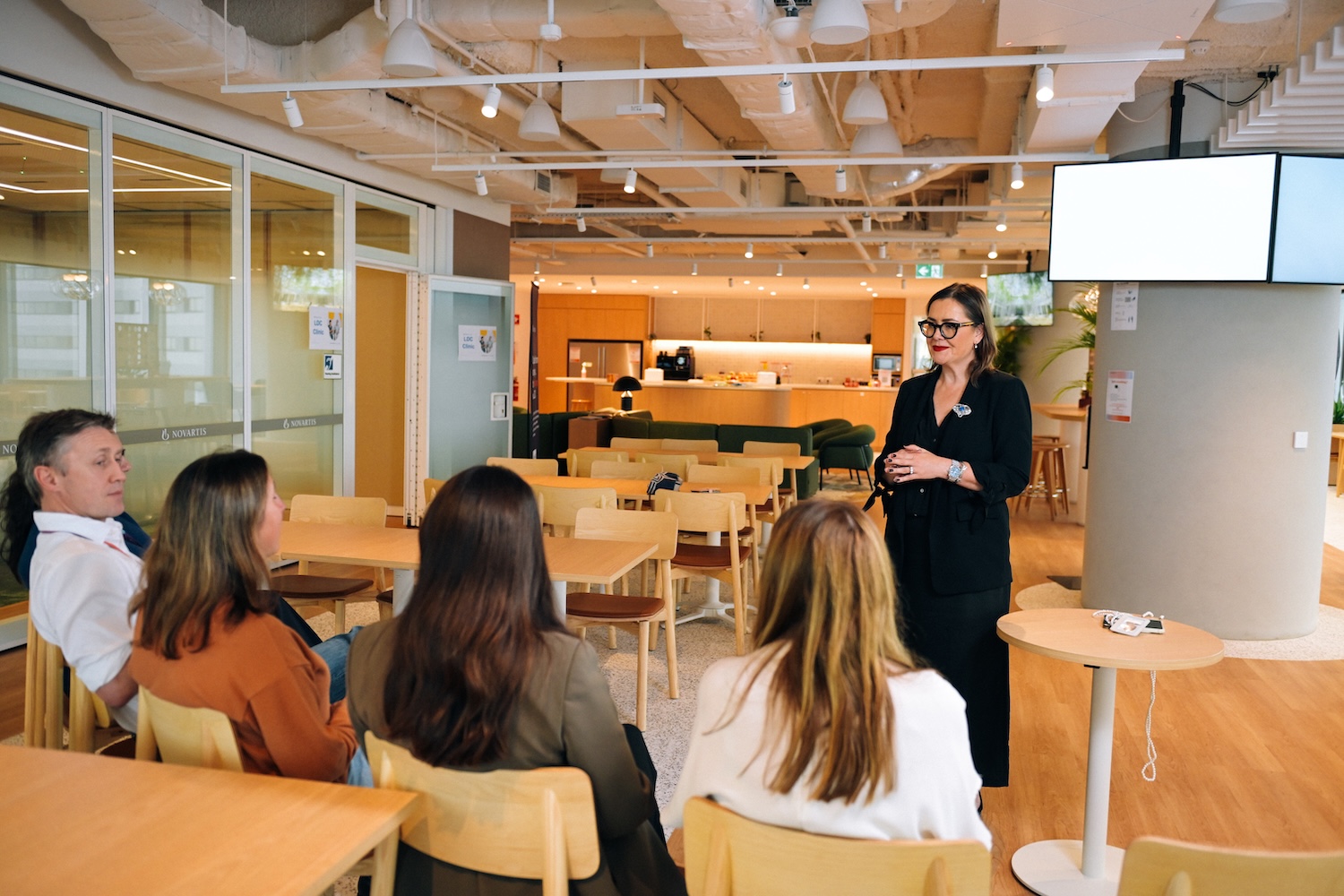
What she insists on, though, is that the conductor’s baton does not belong to marketing by right. It belongs to whoever can do the job. “I’m a big believer in parking titles,” she says. “My line in every team I’ve ever worked in is: who has the capability, who has the capacity, and who can do it compliantly? It could be any number of people from any number of functions.” She has watched colleagues in market access and medical affairs conduct that orchestra beautifully. The skill, she says, is big-picture thinking that reaches beyond your own function, the ability to facilitate other people’s discussions, and the knack of synthesising all of it into something that reflects the collective need. Job titles tell you very little about who has that.
She is equally clear-eyed about money, and about her own relationship to it. The cliché says marketing holds the purse strings. Jess has never felt she did. “Maybe in some organisations they are the purse-string holders,” she says, “but I’ve always had a bit more of a we’re all custodians view. We all have a responsibility to be fiscally responsible with the company’s resources.” Then, with a grin you can hear down the line: “Maybe that’s just the socialist in me.”
Humans trying to engage with humans
When the conversation turns to where the industry actually is, in 2026, Jess is candid about its blind spots, including the ones she shares. The most consequential change of recent years, she argues, is not AI or omnichannel as buzzwords, but the simple, stubborn question of how the industry engages with the people it serves. And here, she thinks, pharma is at risk of being left behind.
The problem is partly self-inflicted. The very compliance and self-regulation that suits Jess’s temperament also, she concedes, “hampers our ability to truly engage through alternative channels.” The industry was once exceptional at the face-to-face relationship: “peer-to-peer, the quality of the relationships we can have with clinicians, that’s one of the things I’m still proud of.” But the world has moved its information-gathering elsewhere, and pharma has not kept pace. “We still put a brand lens on people,” she says. “We look at them as an HCP, or a patient, we put the brand on it, and then we don’t apply the lens of how does this human want to interact with information.” She doesn’t much like the word customer, just as I dislike the word patient. “At the end of the day, we are humans trying to engage with humans on something where we hold common ground.” She knows the symptoms, she says, even if she can’t yet diagnose the cause or prescribe the cure. “I live for the day somebody has the revelation of how we’re going to do this better. Every company’s trying to build the muscle. But we’re going to get left behind if we don’t solve it soon.”
If she could wave a wand and change one thing by 2027, it would be exactly this: to build the industry’s entire engagement approach around what clinicians actually tell us they want, rather than what the industry has decided a good interaction looks like. “We’re really good at doing the research that tells us how clinicians want to engage with us,” she says. “I think we listen to some of it. But we’re so entrenched in how we determine what a successful interaction looks like that we don’t always truly adapt.” The fix isn’t less contact, she’s careful to say: when she sees research on what doctors want, they rarely ask for less time, they ask for things to be clearer and more streamlined. The fix is to make every interaction worth their while. “Don’t just be asking for something from the doctor. Bring something to the table. It has to be anchored in mutual benefit.” The oldest skill in the job, she says, is also the most underrated: “Your ability to listen as much as you speak. And that’s the same for marketers as it is for salespeople.”
On the question of whether Australian pharma marketing is world-class, Jess’s answer is a qualified, slightly anxious yes. The capability here (in insight synthesis, in genuine strategic thinking, in primary market research guided by people who understand the problem they’re solving for) is, she believes, “pretty world-class.” The country’s isolation is both its handicap and its hidden advantage. “We’re a long way away, and the risk is you become a bit invisible,” she says. “But the opportunity is that you get the freedom to try things, to experiment. Australia and New Zealand are some of the most sophisticated markets in the world, but we’re small enough that if you try something and it doesn’t work, the global P&L isn’t going to fall over.” Her worry is structural: as companies grow leaner and more centralised, with execution increasingly pushed from global to regional to local, she fears that “incredible intellectual capability and capacity” risks going underused. The talent here, she argues, increasingly has its greatest impact above market, which is why, in every pharma company you care to name, the mantra is the same. “Mobility is key. Mobility is key. You want to take your best talent and have them influencing your global strategy.”
And AI? She uses it constantly, with an enthusiasm tempered by clear sight. She’ll join a meeting late and let the system catch her up with a summary; she runs her minutes through it; she has it pull together the key threads of a topic before she walks into a room. The phrase she lands on for all of it, “exciting and mildly terrifying,” is probably the most honest thing anyone in the industry has said about the subject. The skill that matters more now than ever, she says, follows directly from the deluge: “your ability to really quickly synthesise information into what matters.” With so much data at our fingertips, the danger is no longer scarcity but the judgment call made on an incomplete picture. Anything that accelerates good synthesis, she says, you should “just get on with now.”
The blanket removed
There is a version of Jess Huf that exists on paper: twenty-five years in the industry, a string of global firsts, a senior oncology leadership role, executive sponsor of her company’s diversity and inclusion council, and, in 2024, a finalist for the Executive Leadership Award at the Australian LGBTQ+ Inclusion Awards. It is an impressive résumé, and it tells you almost nothing about why people respond to her the way they do.
The truer version is the one she is, by her own account, a little reluctant to give. Asked what people don’t know about her, she hesitates, jokes that this is meant to be rapid-fire, and then offers two things. The first: “When I was first born, we lived in a caravan.” The second is harder won. “Despite everything,” she says (despite the confidence, the humour, the apparent ease in any room), “I do still suffer quite significantly from anxiety. And I was a really shy kid. A chatterbox with my family and people I knew, but really quite introverted.” She took drama in high school, she says, to force herself to become comfortable with people. Not because anyone told her to, but because “I was so observant, I’d seen other people, and I had a sense of what I wanted my life to be like. I saw what was required to get there. And it meant having to grow beyond who I was.”
It explains a great deal. The leader who describes herself, without embarrassment, as “humanistic,” who wants people to know her as a person as much as a manager, is the same shy child who taught herself how to be at ease around others. The chatterbox who loves her own company. The confident presenter who still gets nervous every single time she stands up, and who has made her peace with that. “It’s good. It’s healthy,” she says of the nerves. “It means you still care. Nerves come from an apprehension that’s anchored in self-awareness. And the more senior you are, the more you’re actually representing a whole lot of other people who aren’t you. You feel a duty of care to do justice to their work.” The fear, in other words, has been repurposed into responsibility.
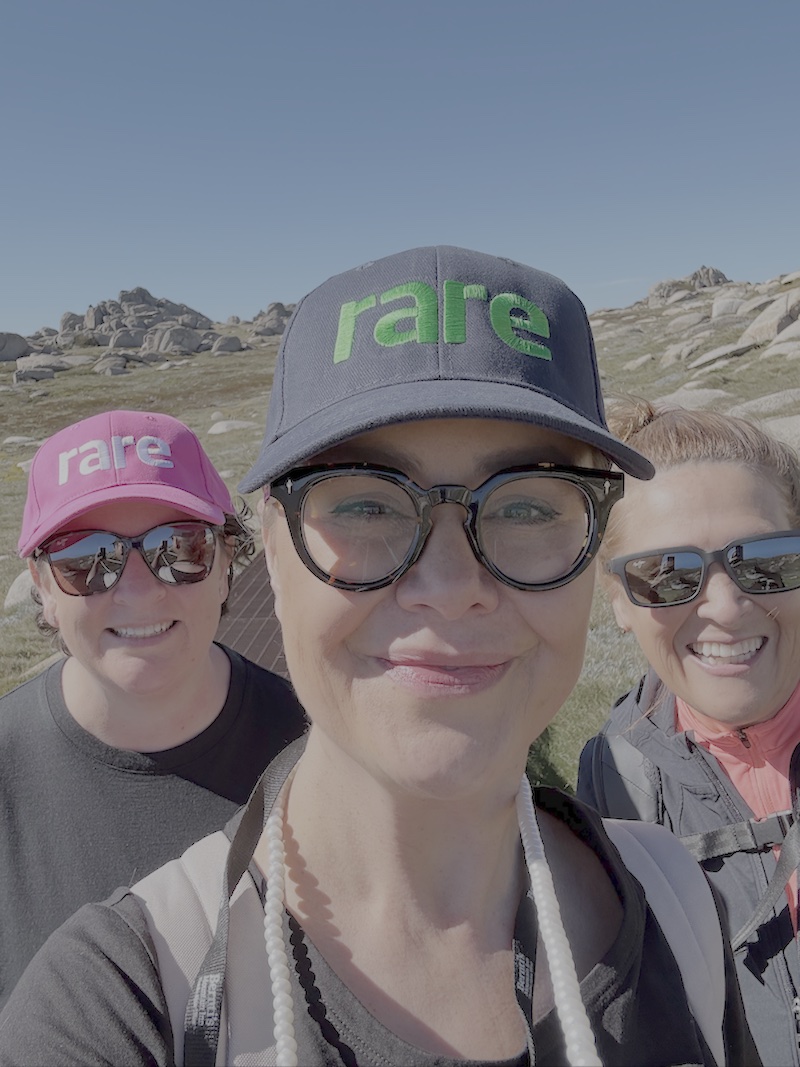
The deepest root of all this runs back to her childhood. Jess grew up in a single-parent household (“not a lot of resources around, not a lot of family around”), and she remembers, vividly, the people who stepped in to help her and her mother “with no vested interest, literally nothing to gain for themselves.” Not money, usually. “Opportunity. Exposure. Introductions.” It is, she says, the thing that has shaped how she leads more than anything else: a determination to pay it forward, to be a champion “not for the underdog, exactly, but for people who maybe don’t have the same visibility.” When she lists the people whose careers she’s proud to have nudged along, she stops herself before naming names, half-laughing that the rest of her team will want to know why they weren’t mentioned. But the satisfaction is real and specific. “I genuinely learn as much from the people I coach and mentor as I hope they learn from me.”
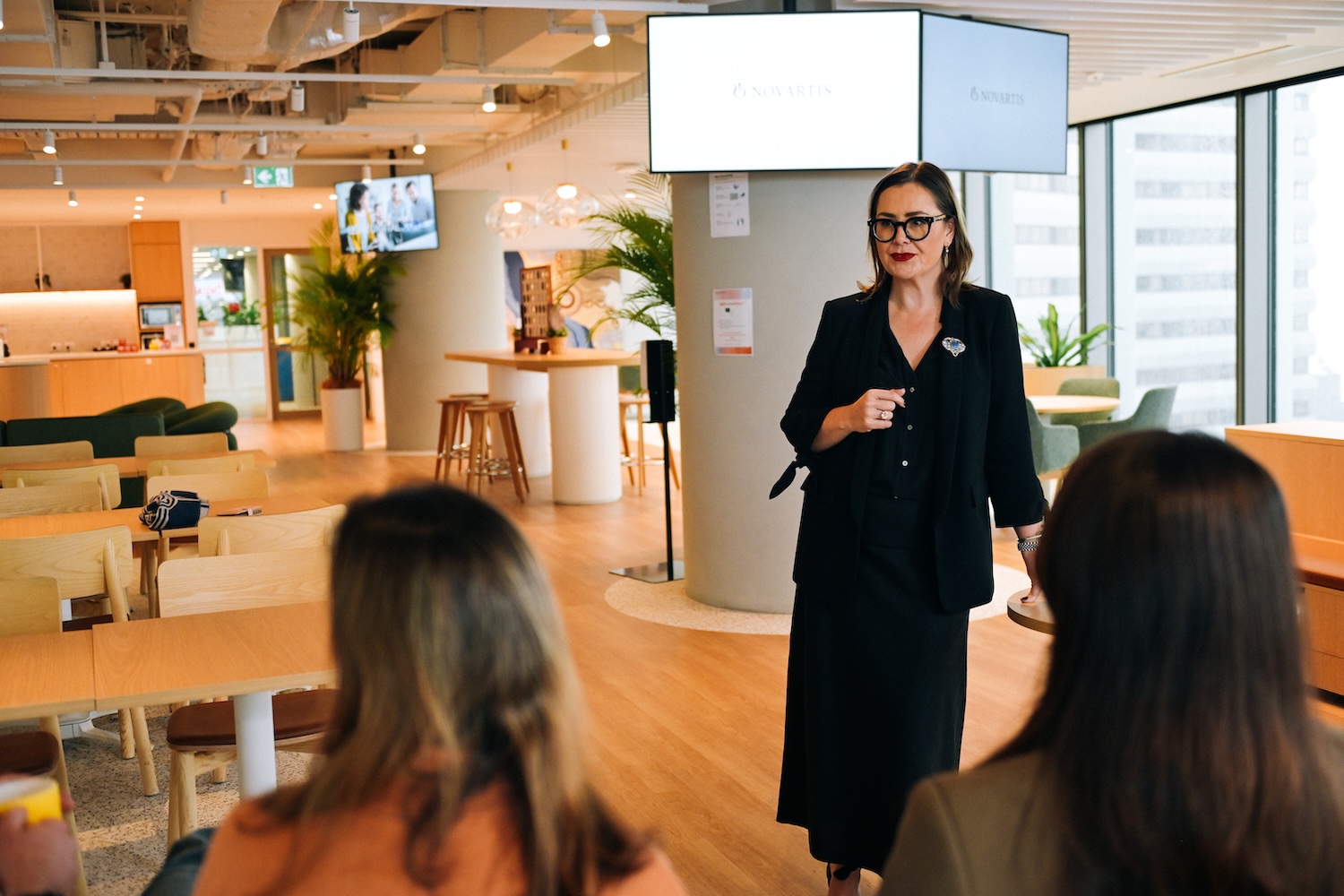
That ethic carries into the harder edges of leadership too. The most transformational role of her career, she says, was not the one with the grandest title: it was the one she was handed during a wrenching organisational change four years ago, when she had to help others through “a pretty traumatic time,” and to have, for the first time, a redundancy conversation with an employee. Leaders who hadn’t worked with her before “took a chance on me,” she says, and she hopes she lived up to it. “Pretty sure I did.” What it taught her was “not about management. It was about who I am as a person.” The other lesson of those years was less noble-sounding and just as important: that her energy has value, and that she has to protect it. “Not giving so much of myself to my work that I’ve got nothing left for the home front” is, she says, the biggest thing she’s learned lately.
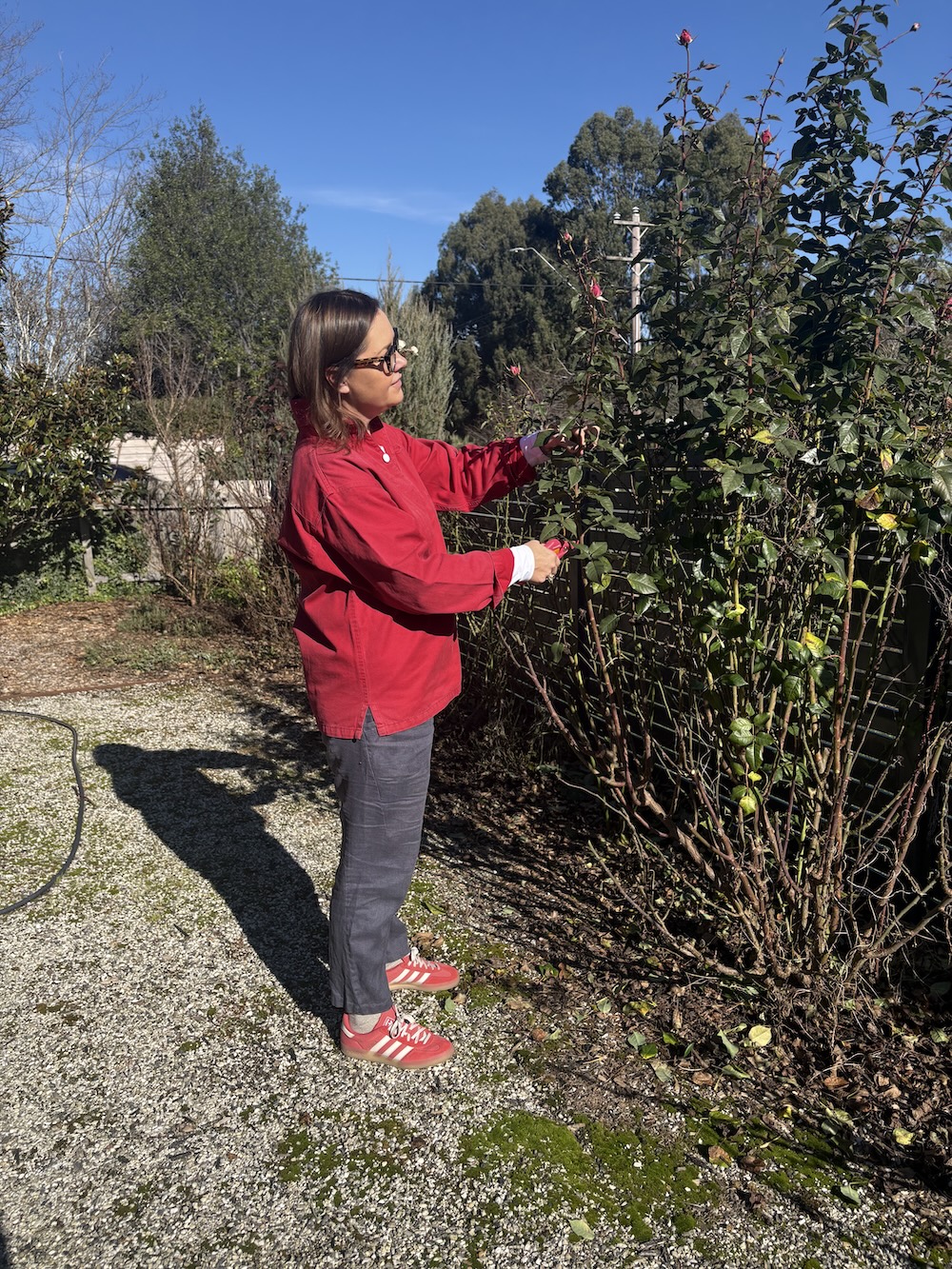
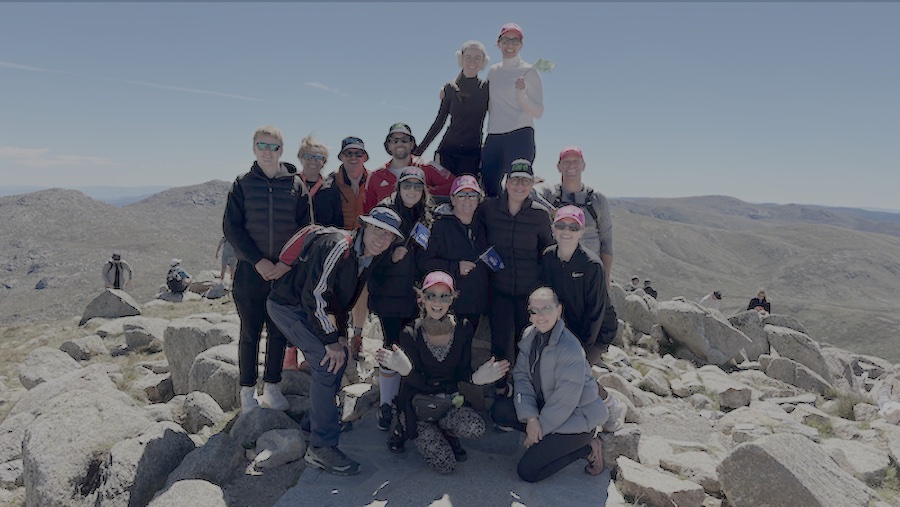
None of this is abstract for her. In March 2026 she climbed Mount Kosciuszko as part of the Kosi Challenge, raising money for Rare Cancers Australia, the cause that sits, unsurprisingly, closest to the work she does every day. The line she gave me when I asked what always brings her back to centre was a single word, delivered after a long pause: “My mum.” Her current obsession, for the record, is perennial gardening. The most overrated skill in her industry, she says, is talking. The most underrated is listening. You suspect she has thought about this more than most.
When I offered my own read of her (smart, funny, less inhibited than most, the kind of person who makes others feel comfortable and who pushes attention back out rather than hogging it), Jess gave an answer that might be the truest thing she said all day. “Maybe I’m just not afraid of being myself,” she said, “because I’ve grown up never having to pretend not to be.” It is a quietly radical statement from someone who leads a diversity and inclusion council, and it lands without any of the weight you might expect. She just says it, the way she says everything, and moves on.
The courage to start something
For all the candour, there is one question that genuinely stumps her: what’s next, for her? She admits she should have thought it through before being asked. When she does answer, it is not about a bigger title or a different company. It is about courage, the thing she has spent a lifetime borrowing and lending and never quite feels she has enough of for herself.
“There’s part of me that would just love to have the courage to step away,” she says, “and go: okay, you’ve learned enough. You might not know it all, but you’ve learned enough. To start something that isn’t me doing it on behalf of a bigger corporation.” Not to work alone, she clarifies: to build something from the ground up, where she sets not just the goal but the how, culturally and operationally. The thing standing in the way is the very thing that has made her career possible. “Every risk I’ve ever taken, I’ve had some level of the foundation of a corporation around me. There’s safety in that.” The people she admires most, she says, are the ones who do bold and courageous things. And then she catches herself, in a moment of unsparing self-assessment that doubles as the most human thing in the entire conversation: “You play it safe, Jess. You’re such a safe player.”
It is hard to know whether she will ever take that leap. But it is easy to know how she would like to be remembered when the time comes, because she answered that one without hesitation, after the longest pause of the afternoon.
“I’d like them to say that I was a humanistic leader. That I focused on the people, both outside the organisation and inside it, equally, while delivering on the business priorities.” A beat. “And ultimately, that I was a problem solver. A humanistic problem solver.”
The funny thing, as I pointed out to her, is that people already say it about her now. ■
This piece is the first in 2026 of the Medcast Media’s quarterly People in Pharma series. The conversation has been edited for length and clarity.
RAPID FIRE
The Humanist: Jess Huf in Conversation
The full interview behind this story, produced as an episode of the People in Pharma podcast: thirty minutes with the woman who leads Novartis’s oncology business in Australia. Short on time? A nine-minute short cut mirrors the short read.
Press play on the cover of the digital edition
people.medcast.com.au/the-humanist